Table of Content
Fill the tray with a heaping amount of baking soda. Next, cut stalks of celery and put them in the glasses of water. Each tiny bubble in the foal is filled with oxygen. The yeast was a catalyst to remove the oxygen from the hydrogen peroxide.
Advertising revenue helps to support our programs. When people get to help scientists with research projects, public scientific literacy and environmental engagement increase. You can use a vacuum chamber to do lots of cool experiments, but a ready-made one can be expensive. Try this project to make your own with basic supplies.
Build a Ferris Wheel
One option is to complete some experiments at home, which can often be done relatively easily and inexpensively. You can also check out local homeschool co-ops or classes to find one that offers lab time as part of their curriculum. Additionally, many online homeschool programs now offer science courses with accompanying labs that can be completed at home.

Gregor Mendel’s pea plant experiments were some of the first to explore inherited traits and genetics. Recreate his cross-pollination experiments with a variety of pea plants you’ve grown yourself. If you’re looking for even more projects for your homeschool, these are perfect for older kids. This STEM activity will teach tweens about the hydraulic lifts - the science behind them, calculating the load capability, and how to build one.
Upside Down Glass of Water Science Experiment
The shaving cream represents the rain cloud and the water is the atmosphere. Egg Teeth – Explore how sugar affects teeth in this easy experiment. Tornado in a Bottle – Create a cyclone in a bottle in this classic, simple experiment. When the aluminum foil is smooth, light reflect off of in in straight lines, which enables you to see your reflection.
If your kids are visual learners, they'll love building this digestive system model as part of their anatomy studies. A variety of hands-on activities to teach older kids about levers. However you choose to enjoy this activity, your kids are sure to have a blast while also learning a lot about catalysts, acids, bases, and more. To simplify measuring distances in the solar system, scientists use astronomical units. Make a scaled model of the solar system and learn how to take the actual distance between planets and convert those distances to astronomical units.
Recycle newspaper into an engineering challenge
Then, add the yeast mixture to the bottle, stand back, and watch the solution become a massive foamy mixture that pours out of the bottle! The "toothpaste" is formed when the yeast removed the oxygen bubbles from the hydrogen peroxide which created foam. This is an exothermic reaction, and it creates heat as well as foam . Easy science experiments include vinegar and baking soda volcanoes, the walking water experiment, Oobleck, DIY lava lamps, or creating a bubble snake. There are tons of simple science experiments that require minimal supplies.
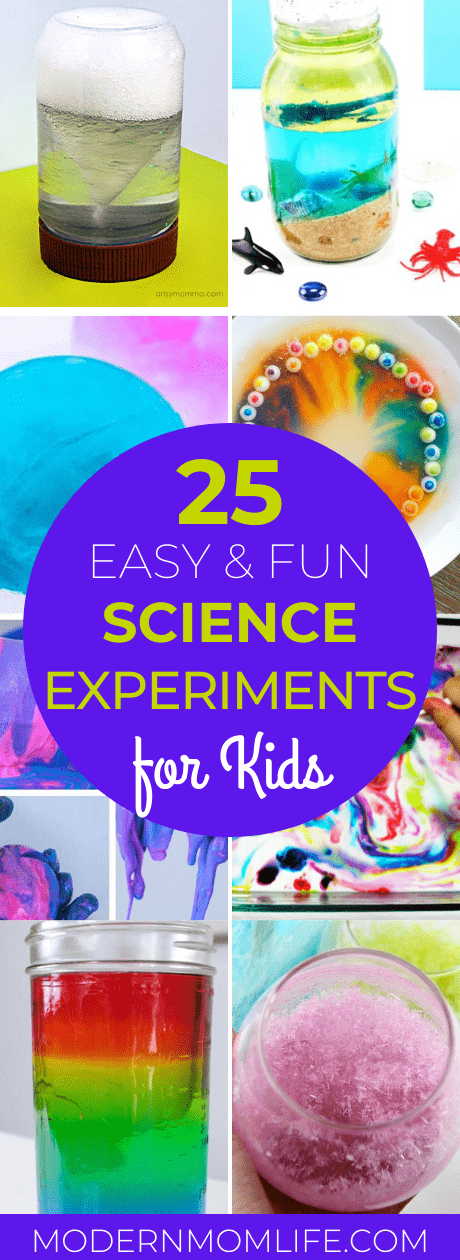
The food coloring has the same density as the water so it sinks through the oil and mixes with the water. As the tablet dissolves it creates a gas called carbon dioxide. In this super easy experiment, kids learn more about how matter behaves as they watch a balloon inflate and deflate as a result of matter being heated and cooled. Kids will giggle with joy with this super easy experiment. With only a ping pong ball and a hair dryer, students will have a great time while exploring Bernoulli’s Principle in action. It takes about a week for the crystals of this rock candy experiment to form, but once they have you'll be able to eat the results!
Some science experiments for high school are just advanced versions of simpler projects they did while they were younger, with detailed calculations or fewer instructions. Other projects involve fire, chemicals, or other materials they couldn’t use before. This super simple science experiment is really more of a magic trick, and it will teach your kids all about light refraction. Ave you heard of the elephant toothpaste experiment yet? Kids of all ages will love learning about catalysts and exothermic reactions in this simple fun science activity. Light refraction causes some really cool effects, and there are multiple easy science experiments you can do with it.

Kids learn about a vortex and what it takes to create one. Kids will get a kick out of this experiment, which is really all about Bernoulli’s principle. You only need plastic bottles, bendy straws, and ping-pong balls to make the science magic happen. Use that homemade chalk for this activity that turns kids into human sundials! They’ll practice measuring skills and learn about the movement of the sun across the sky. Eggshells contain calcium, the same material that makes chalk.
By mixing just flour, salt, and water, you'll create a basic salt dough that'll harden when baked. You can use this dough to make homemade dinosaur bones and teach kids about paleontology. This simple experiment teaches kids about inertia (as well as the importance of seatbelts!). Take a small wagon, fill it with a tall stack of books, then have one of your children pull it around then stop abruptly. They won't be able to suddenly stop the wagon without the stack of books falling.
That’s not just bad for humans, it’s also bad for the plants, animals and insects who are disrupted by light pollution. Try some of these fun life science activities from Jump Start. By exploring ideas in a lab, at home, or outdoors, children can let their imaginations soar and think up possibilities never before considered.
Below, you’ll find what you need to bring a wide variety of topics to life in your homeschool, so choose one and get started. If you don’t have any available, use the activities below. You can also do a quick search online to find some cool ideas. Science is a subject that can be difficult to grasp from just reading a textbook. However, when students get involved and experiment with the concepts they’re studying, they usually find the material much more engaging and easier to understand. Plus, they get to practice their problem solving and critical thinking skills.


No comments:
Post a Comment