
Instead, we found that the stress hormone actually acts on a cluster of dermal cells underneath the hair follicle, known as the dermal papilla,” said Sekyu Choi, the lead author of the study. If you notice sudden or patchy hair loss or more than usual hair loss when combing or washing your hair, talk to your health care provider. Sudden hair loss can signal an underlying medical condition that requires treatment. If needed, your health care provider might also suggest treatment options for your hair loss.
How does stress impact the hair cycle?
Symptoms include thinning hair, usually around the top of your head. Treatment exists to reverse hair loss, but hair will typically grow back in three to six months without treatment. In men, this is known as male pattern baldness; in women, female pattern baldness.
What can I expect if I have telogen effluvium?
In most cases, a person will not lose more than 50% of their hair. The main telogen effluvium symptom is an increase in the amount of hair a person sheds. It is a form of temporary hair loss that usually happens after stress, a shock, or a traumatic event.
Cancer: Managing Symptoms Discussions
Thinning caused by telogen effluvium may be treated with a medication called minoxidil (Regaine) – this is a topical treatment applied directly to the scalp. If you're worried about your hair loss but think it might be telogen effluvium, you should still speak to your GP. This article looks at the causes, symptoms, diagnosis, and treatment of telogen effluvium, including dietary changes that may help. Applied using devices or by hand, regular sessions of scalp massage may promote hair thickness. In one study, 68.9% of those massaging their scalp between 11 and 20 minutes a day reported less thinning and positive results.
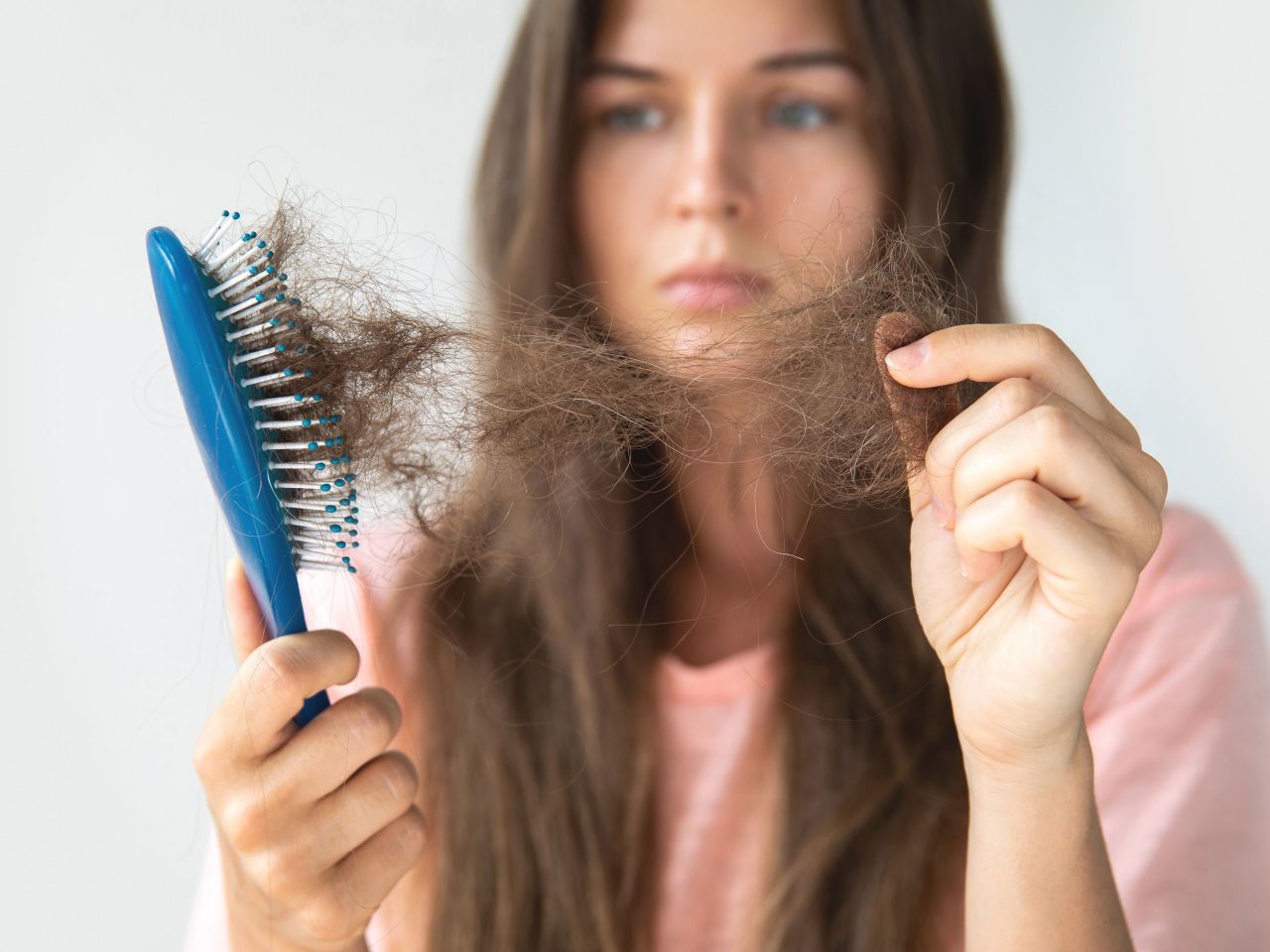
The short answer is yes, stress can cause hair loss, or contribute to it. There are three types of hair loss that can be triggered (or made worse) by stress - telogen effluvium, alopecia areata and trichotillomania. Stress-related hair loss is often temporary, so it's unlikely your hair will be lost forever. But it's still important to speak to a doctor about it, especially if it's bothering you.
Treatment
While the exact reason for this type of hair loss is unknown, it is generally understood that “the immune system mistakenly attacks hair follicles, leading to hair loss,” she adds. Stress pushes a large number of hair follicles into the resting phase where they stop growing. With telogen effluvium, the anagen phase slows down, meaning fewer hairs enter the next two stages. With this condition, around 30% of hair follicles move into the telogen phase, meaning hair shedding occurs.
Traction alopecia
Too much of vitamins A and E and selenium can actually spur hair loss. A 2020 review of the literature on telogen effluvium suggests that this particular form of hair loss equally affects men and women of all races. Typically, the most common types of hair loss are treated with topical or oral medications, which will likely be the first course of treatment. There’s a range of treatment options for hair loss, but the best option for you will depend on what’s causing your hair loss. A typical hair transplant involves removing patches of hair from your head and reinserting the hair follicle by follicle into the bald sections.
What Doesn’t Prevent Hair Loss?
Men can experience this at any time after hitting puberty, but for women, it's after menopause. However, sometimes hair loss has nothing to do with genetics and is the result of stress. Stress plays a huge roll in hair growth, and there are a few different types you can suffer from.
11 Best Hair Growth Vitamins And Supplements (2024) – Forbes Health - Forbes
11 Best Hair Growth Vitamins And Supplements ( – Forbes Health.
Posted: Fri, 05 Jan 2024 08:00:00 GMT [source]
One of the most popular questions is whether or not stress really causes hair loss. It is true that people have been seen pulling out their own hair when overcome by anxiety, but nowadays, the problem seems to be even deeper than even that. Chronic stress has been stated to be one of the main reasons for hair loss as well. And if you get your stress under control, your hair might grow back. For a detailed guide to treatments for alopecia areata, consult this page on the Alopecia UK website.
Hairs from the head and other parts of the body start falling off rapidly about two weeks after starting treatment. However, you can expect hair to regrow two to three weeks after finishing, with the hair often finer at first. A wide variety of health conditions, medications, and other factors can be the cause of hair loss. It’s important to understand what these are and how they impact your hair. If you’re thinking about vitamin supplements, talk to your healthcare provider. They can order a blood test to check your vitamin levels and help you determine proper dosages.
Hair Loss And Menopause: Treatment And Prevention – Forbes Health - Forbes
Hair Loss And Menopause: Treatment And Prevention – Forbes Health.
Posted: Thu, 19 Oct 2023 07:00:00 GMT [source]
And still others choose one of the treatments available to prevent further hair loss or restore growth. But Dr Asfour stresses it’s important to speak to your doctor before taking any treatments. In alopecia areata, the immune system attacks the hair follicles, causing patches to appear on the scalp, Proudman said. “The patches are usually the shape and size of a coin, although they can be larger,” she said. This type of alopecia is not permanent, and the hair can recover and regrow.
In order to understand whether or not stress plays a large role in making our hair fall out, we need to look closely at how hair grows. Scientists have been investigating the negative effects of stress on physical and emotional health for years. While many myths about stress have been debunked, we have also gained valuable new information about how stress actually affects society.
A team led by Dr. Ya-Chieh Hsu of Harvard University studied the underlying mechanisms that link stress and hair loss. The study was supported in part by NIH’s National Institute of Arthritis and Musculoskeletal and Skin Diseases (NIAMS). It’s often seen in patches, especially toward the center of the scalp. People affected by TE usually don’t lose all of their scalp hair. However, it is important to note that hair shedding can be caused by a variety of reasons excluding stress. For example, hair shedding can also be caused by certain medications that you are taking or even thyroid disease.
Telogen effluvium is when large numbers of hair follicles are pushed into the resting phase. As a result, people with this type of hair loss experience more hair falling out during brushing or washing, and the hair becomes noticeably thinner. Prolonged or intense stress can also cause the immune system to overreact, contributing to hair loss, Proudman told Live Science. According to a 2020 review in the Central European Journal of Immunology, alopecia areata is a type of hair loss where a person’s immune system attacks the hair follicles. Environmental factors, such as stress, may trigger this reaction, the review authors suggested. A 2021 rat study found that removing adrenal glands, which produce essential stress hormones in rats and humans, resulted in rapid hair regrowth cycles.
High levels of testosterone in the female body cause many women to see thinning of hair on the scalp. Once the hair can no longer access your blood supply, it will stop growing and enter the last phase, telogen. Hairs in this phase hang for around 3 months until it naturally sheds. If your hair has shed naturally during this phase, it will have a while and hard bulb at the root.


No comments:
Post a Comment